
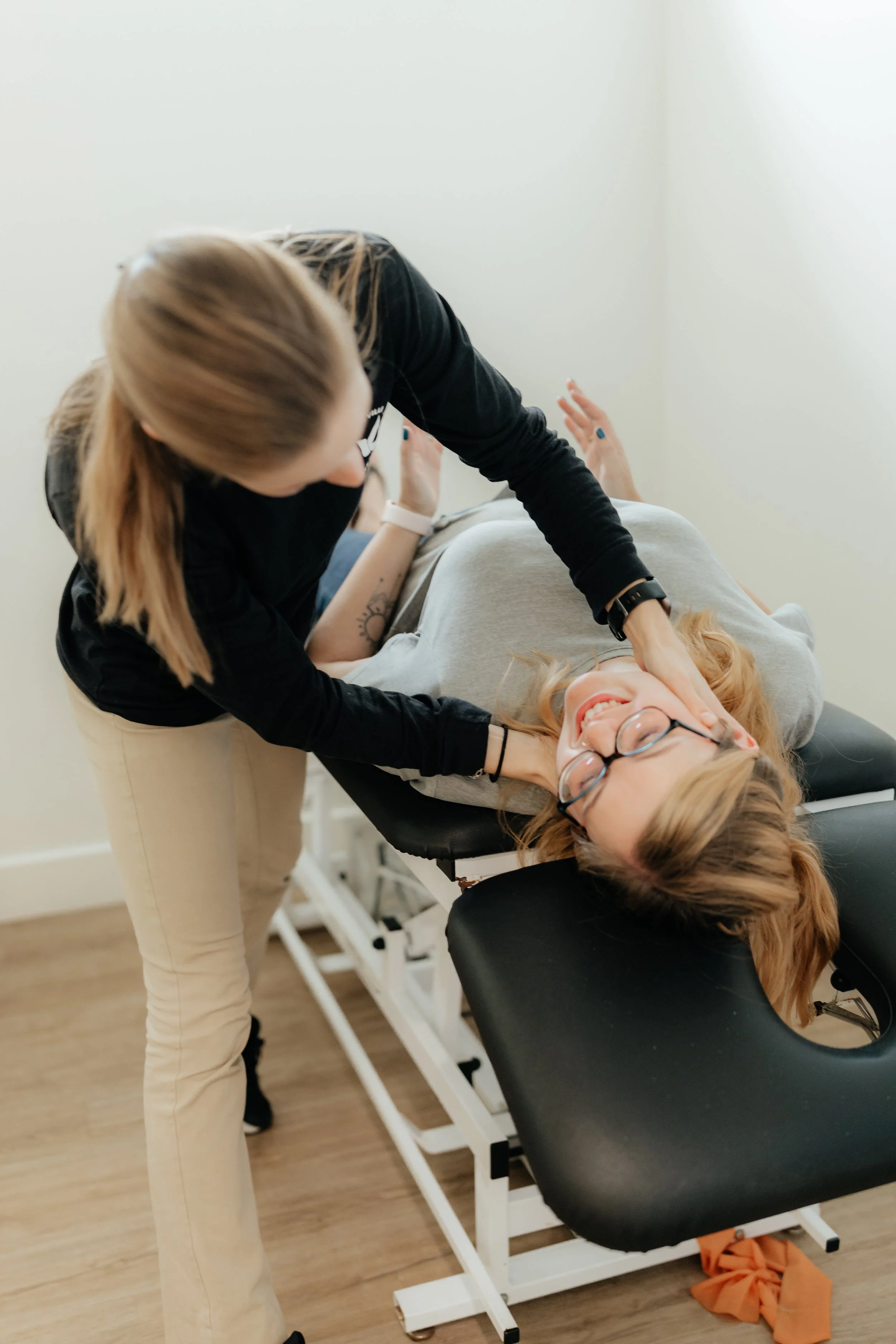
Vestibular Rehab.
Stabilizing Solutions.
If you’ve ever experienced vertigo, dizziness, unsteadiness and off balance you will be ecstatic to hear that we have therapists specialized in Vestibular Rehab to help assess and treat your symptoms.
Put simply, your vestibular system is part of your inner ear and provides your brain with information on where your head is in space. You actually have two vestibular systems; one in each ear. When one of those systems is not working properly or injured, these symptoms can occur.
Injuries that can cause changes to your vestibular system include: head trauma, inner ear infections, concussion, aging and certain medications. Vestibular problems are very common and can effect people of all ages.
-
Spinning sensation
Difficulty reading or concentrating
Poor balance
Motion sensitivity
Nausea
Headaches
Sensitivity to bright lights + noises
Decreased tolerance to crowds
Blurring of vision with head movement
Difficulty watching TV or movies
Vestibular Rehab.
Most Common Types
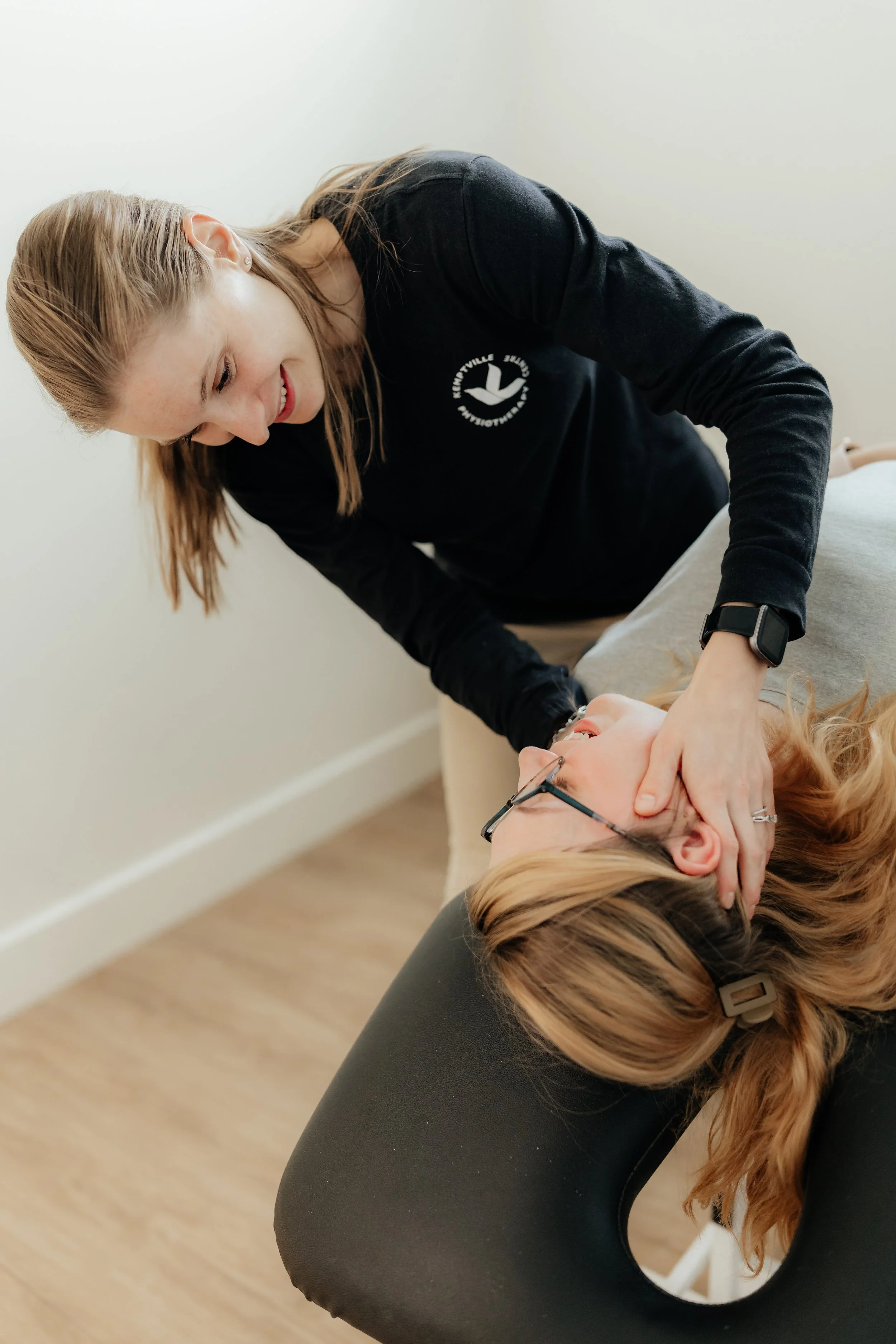
Assessment
Difference Between Dizziness & Vertigo
The most important part of a Vestibular Assessment is the subjective history (aka all the questions). There are many different reasons someone can have dizziness or vertigo. A thorough Q&A prior to any physical assessment can help your therapist to know how to proceed.
Dizziness is s a broad subjective term used to describe how the patient is feeling. There are 4 categories that fit under the definition of dizziness.
These categories include:
vertigo (a sensation that someone or their surroundings are spinning)
Disequilibrium (off balance/decreased coordination)
Presyncope (impeding loss of consciousness)
Lightheadedness (head feeling as if it is not attached to the body).
Reference: https://www.ncbi.nlm.nih.gov/books/NBK325/
BPPV
Benign Paroxysmal Positional Vertigo (aka BPPV) is a common cause of vertigo. BBPV symptoms are brief in nature and symptoms are related to head position. Vertigo occurs when little crystals normally found at the base of your vestibular system dislodge and travel outside of where they should be. When the crystals travel, it changes the information that is being sent to your brain about your head position and results in vertigo, nystagmus (quick eye movements) and more commonly nausea. Specific treatment maneuvers can help to move these crystals back to where they belong and reduce your symptoms.
A subjective history is used to determine if it’s likely that your symptoms are related to BPPV. From there, your therapist will move onto the physical part of the assessment. An assessment technique called the Dix Hallpike and Head Roll Test are used to determine if the symptoms are related to BPPV (ie. confirming BPPV as the diagnosis, determining which canal has been affected and planning the treatment technique).
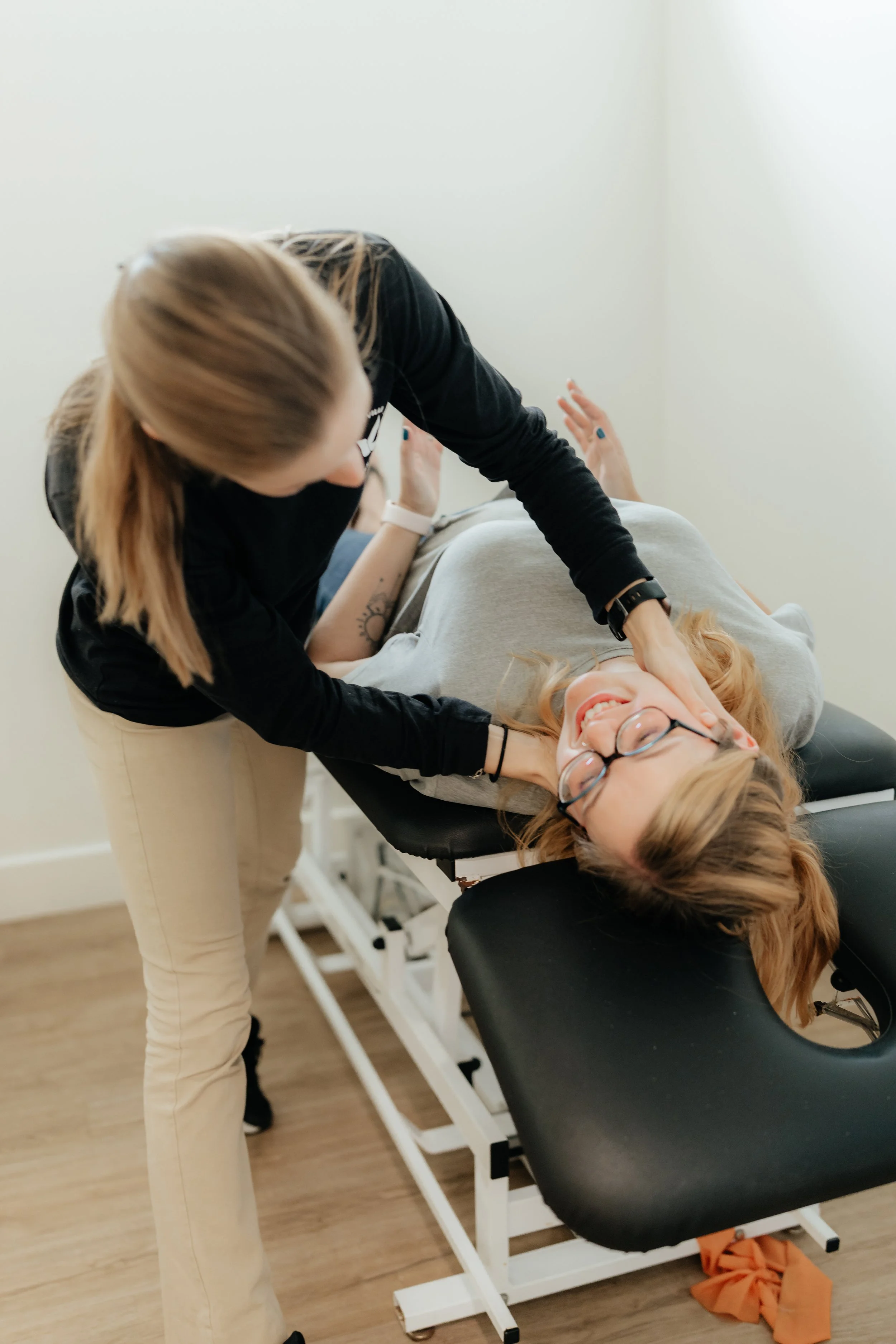
Hypofunction
This means that one of your vestibular systems (remember you have two) is no longer working as well as it should be. This tends to cause dizziness, a feeling of unsteadiness or off balance. With an exercise base approach, we can improve these symptoms.
We use a subjective history to guide your therapist’s next steps. If Hypofunction is suspected, your therapist will take you through a variety of physical assessments:
Oculomotor assessment
Gait assessment
Balance assessment
Multi-system (looking at how other sensory systems play a role such as your vision + proprioception)
Neck assessment
These tests will help to determine the factors that play a role in your vertigo symptoms. This is how we will develop your treatment plan.
Treatment
There are specific treatment techniques that your therapist will use based on their assessment findings. Treatment techniques can range from a sequence of head positions combined with body rolls to an exercise-based approach that helps reacquaint your vestibular system with normal movement. Education is a big part of our treatment plan. Understanding what is causing your symptoms and what we can do to improve your function is key.
*Assessing + treating the vestibular system can be symptom provoking.
Cervicogenic Dizziness
Cervicogenic dizziness originates from dysfunction in the cervical spine (aka the neck), typically caused by injury, strain, or degeneration, rather than an inner ear issue. It is characterized by neck pain, stiffness, and symptoms that worsen with specific head movements or, often accompanied by headaches.
Dizziness occurs because the joints in our neck contain sensors (proprioceptors) that tell the brain where the head is in space. When these muscles or joints are injured or stiff, they send incorrect information to the brain, which conflict with visual and inner ear inputs, resulting in dizziness.
Unlike inner ear issues that feel like a fast spin, this usually feels more like an unbalanced or unsteady sensation. Symptoms can be triggered by neck movements like neck rotation, extending the head back, or maintaining certain positions for too long. Cervicogenic dizziness is a diagnosis of exclusion meaning that it is identified when other, more common causes of dizziness (such as inner ear infections or BPPV) are ruled out.
Other
There are many other vestibular disorders which may cause feelings of dizziness, such as:
Acoustic Neuroma
Perilymphatic Fistula
Ménière’s disease
Vestibular migraine
Vestibular labyrinthitis or neuritis
Mal de Debarquement Syndrome
Persistent Postural Perceptual Dizziness
Some of these conditions require medical management, however, the initial assessment can help guide the patient in the right direction if further medical intervention is needed. In addition, many of these conditions once stabilized can benefit from vestibular rehabilitation to aid with the side effects of the condition.
Our Fees
-
Private one-on-one assessment with a Registered Physiotherapist who has specialized training in Vestibular Rehab.
-
Private one-on-one follow-up visit with your Physiotherapist who has specialized training in Vestibular Rehab. 30-minutes in length
Frequently Asked Questions
-
The most commonly treated vertigo is Benign Paroxysmal Positional Vertigo (aka BPPV). With BPPV, symptoms of dizziness are related to head or eye movements and often decrease within one minute. Your therapist will be able to help identify if your symptoms are related to BPPV or if there may be another reason you are experiencing dizziness or vertigo symptoms.
-
BPPV, which stands for Benign Paroxysmal Positional Vertigo, is when the crystals in your inner ear get dislodged and enters into your vestibular system. This causes a mismatch of information being sent to the brain, causing confusion about where your head is in space resulting in nygstamus (rapid eye movements), vertigo (room spinning) and in most cases nausea/vomiting.
The cause is unknown in most cases. This is typically a temporary issue that can be helped with a thorough assessment and specific maneuvers to get the crystals back where they belong.
-
No. You do not have to see your doctor before having a vestibular assessment with one of our therapists who specializes in this area. If we were to have any concerns from that appointment, we would make the recommendation for you to see your doctor prior to any treatment. This is quite rare.
-
Yes! Any assessment or treatment provided by a Registered Physiotherapist is covered under most private extended health plans.